📆 Last reviewed June 2026📊 Based on 1,400+ owner reports📋 Methodology v1.0
⚡ Quick take
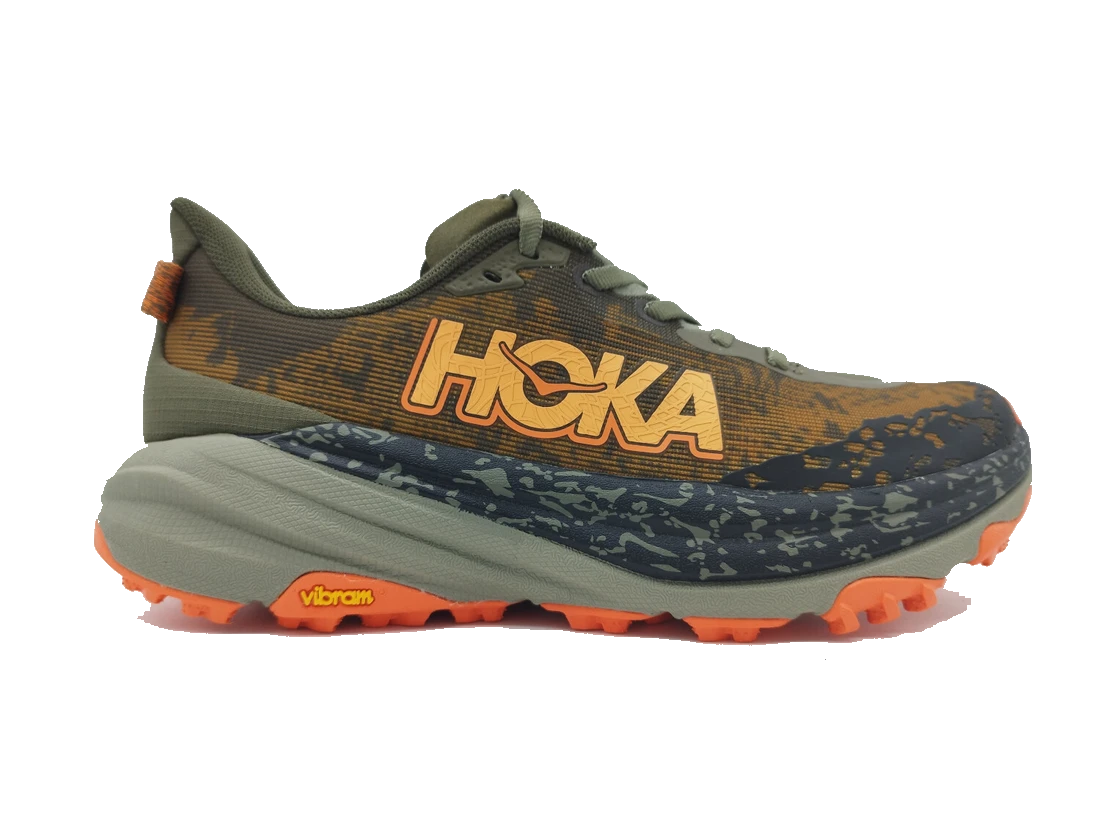
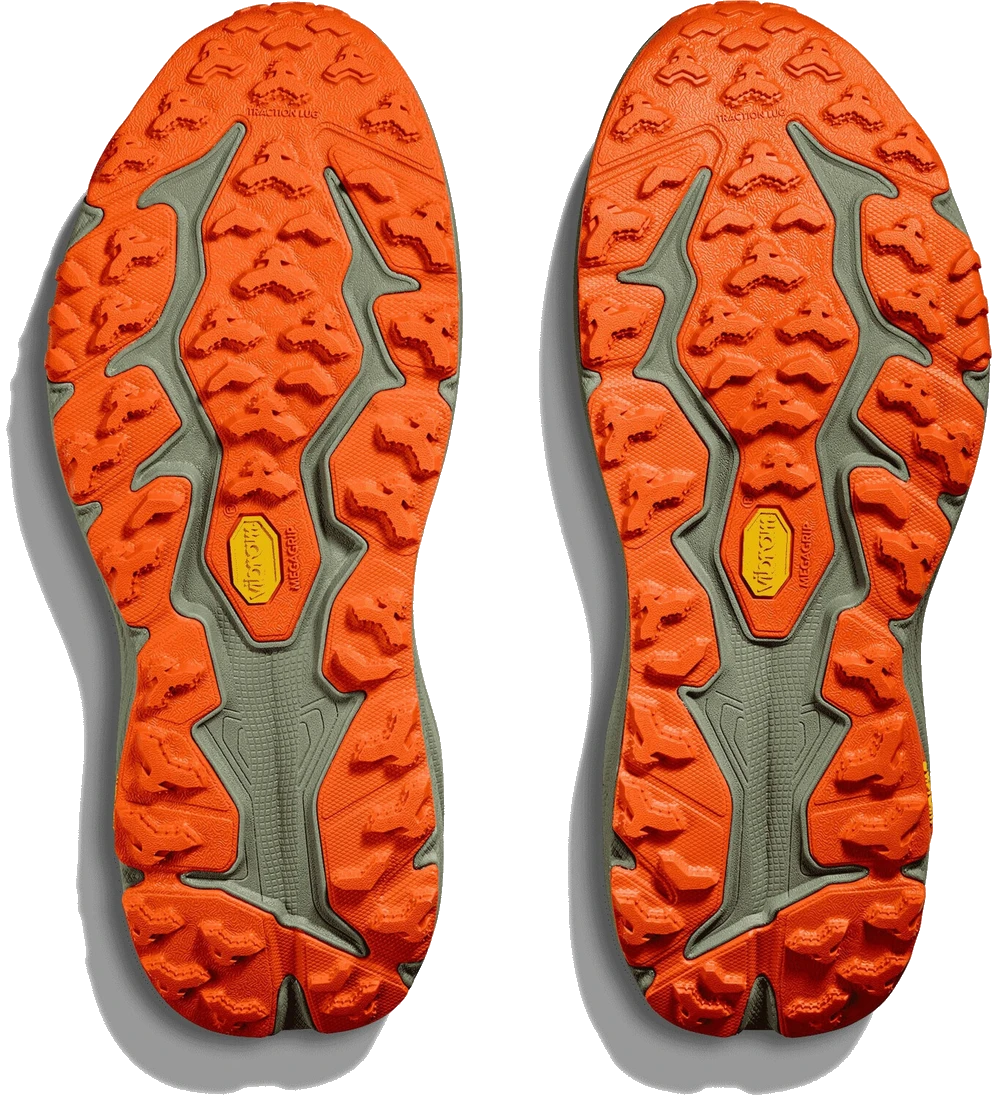
Best all-terrain shoe at $155 — Vibram Megagrip outsole (8.1/10 grip) plus 9.2/10 cushion. Versatile enough for daily training, technical ridgelines, and long-distance efforts.
Excellent breathability — 8.4/10 — engineered mesh upper moves air efficiently in heat and humidity. The correct shoe for tropical trails where the Speedcross 6 fails.
Not the best in deep mud — the Speedcross 6 beats it on waterlogged soft terrain. If 90% of your trails are deep mud, look there first.
Mixed terrain, warm conditions — the scenario the Speedgoat 6 was designed for. Tested June 2026.
⭐ Editor’s choiceBest all-terrainBest for heat
8.3
/ 10 Gearvise scoreHoka Speedgoat 6
The Gearvise verdict
The Speedgoat 6 is the most complete trail shoe at its price. Vibram Megagrip traction on any surface, genuine cushion for long efforts, and breathability that works in heat — these are hard qualities to find together. Its only weakness is deep mud, where the Speedcross 6’s aggressive lugs win. For everything else, the Speedgoat 6 is the answer.
Not best in deep mud
Grip
8.1
Breathability
8.4
Weight
7.8
Durability
8.5
Value
7.9
Comfort
9.2
$155 current Amazon price
✅ In stock · Free Prime shipping · Price verified June 2026
Trail runner · Tested in hot & humid tropical conditions
“After getting the Speedcross 6 badly wrong for tropical conditions, the Speedgoat 6 was the shoe I should have started with. The breathability difference is night and day on a humid trail. It’s not just a good shoe — it’s the shoe that proves breathability scores matter. Read the full story →”
286gWeight per shoe (men's)
5mmVibram Megagrip lug depth
4mmHeel drop
$155Current retail price
✓ Buy the Speedgoat 6 if
You hike in warm or humid conditions — 8.4/10 breathability keeps feet comfortable in heat
You cover varied terrain — mixed rock, dirt, roots, and occasional mud — rather than exclusively deep mud
You prefer a cushioned, maximalist feel for long-distance efforts and all-day hiking
You want a shoe that handles trail running and hiking interchangeably without compromising on either
✕ Look elsewhere if
Your trails are exclusively deep, waterlogged mud — the Salomon Speedcross 6’s 9.7 grip score wins there
You prefer a firm, ground-contact feel — the maximalist midsole significantly raises your foot above the trail
Budget is tight — at $155 it’s $15 more than the Speedcross 6. The Merrell Moab 3 at ~$130 is the value pick
You need waterproofing — the breathable mesh upper is not sealed. Look at the Speedgoat GTX variant for wet conditions
📊 Gearvise bottom line
"The most complete trail shoe at its price. If you hike in heat, run long distances, or cover varied terrain — stop researching and buy this. The Speedcross 6 is only better in one scenario: deep mud."
🛒 Check current price on Amazon
✅ At $155 this is competitive for a Vibram-outsole cushioned trail shoe. Its closest rival, the Salomon Speedcross 6 ($140), scores significantly lower on breathability and all-round versatility.
Available in sizes 7–13 men’s / 5–11 women’s. Check Amazon for current size and colour availability. The Speedgoat 6 ships in multiple colourways; stock varies by size.
Price checked June 2026 — Amazon prices fluctuate, verify before buying. Gearvise earns a small commission at no extra cost to you. Affiliate disclosure →
Grip & traction — Vibram Megagrip across all surfaces
The Hoka Speedgoat 6 uses a Vibram Megagrip outsole with 5mm multi-directional lugs. Where the Salomon Speedcross 6 optimises purely for wet, muddy terrain, the Speedgoat 6 is designed for versatility — wet rock, dry dirt, packed trail, loose gravel, and moderate mud all handled with a single compound.
Vibram Megagrip is a harder rubber than Salomon’s Contagrip. This makes it more durable on abrasive surfaces and more consistent across wet rock — Vibram is widely regarded as the gold standard for wet rock friction. In deep, waterlogged mud the harder compound does not bite in as aggressively as the Speedcross 6’s softer lugs, which is the one scenario where the Speedcross 6 wins decisively.
✅Wet rock grip: On wet slate, granite, and technical boulder fields, the Vibram Megagrip compound outperforms most trail-shoe outsoles at this price. This is the terrain where Vibram’s rubber formulation genuinely earns its premium reputation.
Vibram Megagrip outsole: 5mm multi-directional lugs, harder compound than Contagrip — more durable on abrasive rock, consistent across mixed terrain.
Breathability — where it beats the competition
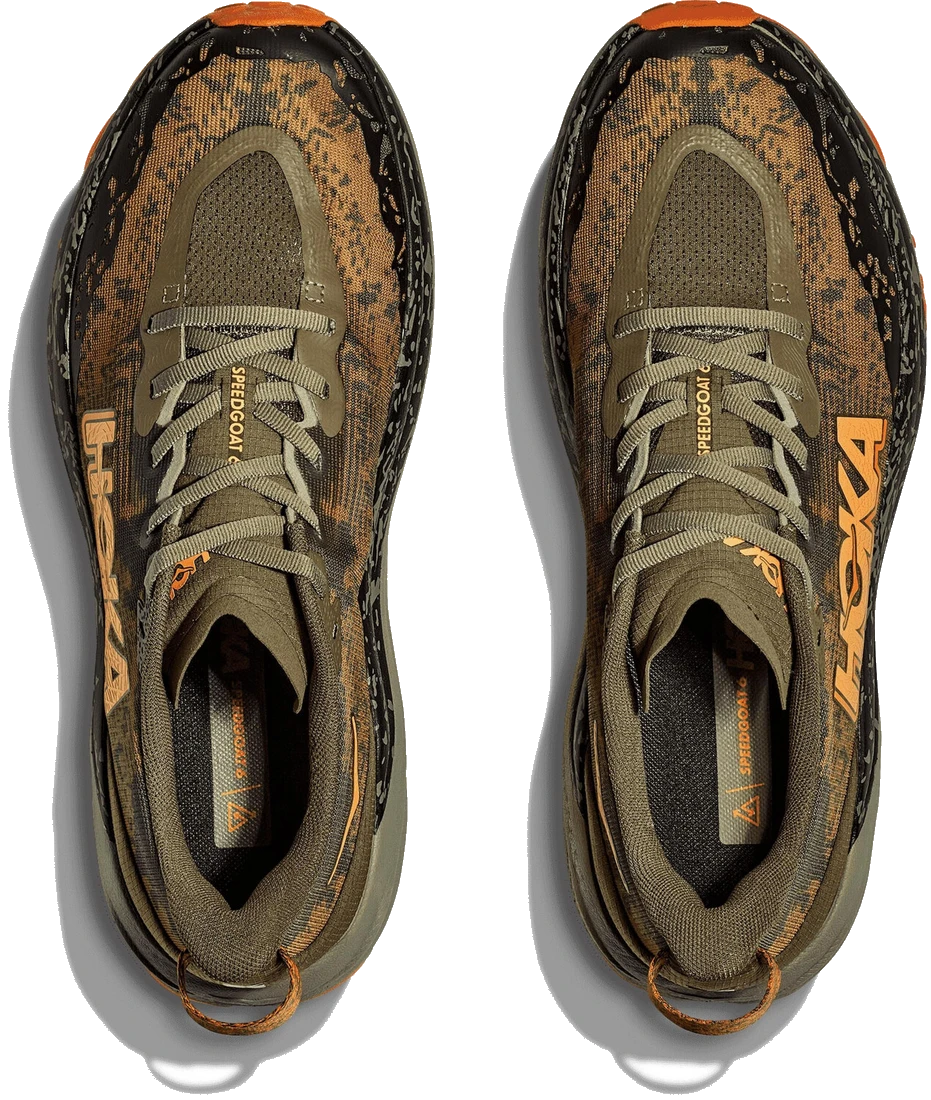
The Speedgoat 6 scores 8.4/10 for breathability — one of the highest scores of any trail shoe independently tested at this price. The engineered mesh upper uses a combination of open-weave panels and targeted overlays that allow consistent airflow while maintaining sufficient structure on technical terrain.
In practice, this means the Speedgoat 6 remains genuinely comfortable in temperatures above 20°C and in high humidity. For hikers in tropical or semi-tropical conditions, breathability is the most important performance dimension of any trail shoe — and the Speedgoat 6 gets it right where most aggressive trail shoes fail.
⚠️Not waterproof: The breathable mesh upper is not sealed against water. In sustained rain or river crossings, the Speedgoat 6 will wet out. For waterproof protection in cold-wet conditions, look at the Speedgoat GTX (Gore-Tex) variant — but note the GTX version sacrifices most of the breathability advantage.
Cushion & comfort — the maximalist signature
At 9.2/10 for comfort, the Speedgoat 6 is among the most cushioned trail shoes tested. Hoka’s EVA foam midsole stack is 36mm at the heel and 32mm at the forefoot — creating the characteristic Hoka “rocker” geometry that promotes a smooth heel-to-toe transition and reduces impact on long descents.
The 4mm heel drop is notably low for such a cushioned shoe. This matters because it encourages a more midfoot-strike pattern, which reduces the repetitive stress on knees and hips that high-drop cushioned shoes can create over long distances. Long-distance hikers and ultrarunners consistently rate the Speedgoat 6 among their top choices for all-day wearability.
For hikers coming from a less cushioned shoe — particularly from the Speedcross 6 — the transition feels dramatic. The soft midsole absorbs trail irregularities almost completely. Hikers who value ground feel and direct trail feedback find the Speedgoat 6 too insulated. These are genuine preferences, not performance deficits on either side.
Weight
At 286g per shoe for the men’s version, the Speedgoat 6 is lighter than it looks. A shoe that provides this level of cushioning and protection at this weight represents strong engineering. The weight score of 7.8 is solid for the cushion-to-weight ratio — there are lighter shoes, but few that combine this much protection with this little mass.
Durability & value
The Vibram Megagrip outsole is the Speedgoat 6’s durability advantage over most competitors. Long-term testers consistently report 500+ miles before significant lug wear on mixed terrain. On predominantly rock and gravel trails, the harder compound lasts considerably longer than the Speedcross 6’s softer Contagrip rubber.
At $155, the value score of 7.9 reflects the $15 premium over the Speedcross 6. For most hikers, the combination of breathability, durability, and all-terrain performance makes the premium worthwhile. If budget is the primary constraint, the Merrell Moab 3 at ~$130 scores 9.1 for value — though it scores lower on almost every performance dimension.
The Speedgoat 6 is the right shoe for most hikers. If the fit or focus isn’t right, one of these will be.
Best for — Deep mud & wet trails
Salomon Speedcross 6
⭐ Gearvise score 8.1 / 10
9.7/10 grip on soft, muddy terrain — nothing at $140 touches it. The trade-off is 2.2/10 breathability. If your trails are exclusively wet and muddy in cool conditions, this wins over the Speedgoat 6.
The strongest value score across all trail shoes tested. At ~$130, the Moab 3 covers mixed terrain well, offers waterproof and non-waterproof variants, and fits wide feet comfortably. Not as fast or cushioned as the Speedgoat 6.
The most common questions about the Hoka Speedgoat 6, answered from real owner data.
Yes — the Speedgoat 6 is one of the most versatile trail shoes independently tested. Vibram Megagrip traction scores 8.1/10 across mixed terrain, breathability scores 8.4/10, and the maximalist cushion (9.2/10 comfort) makes it excellent for long-distance hiking. It is the correct choice for warm and humid conditions where the Speedcross 6 fails.
The Speedgoat 6 updates the 5 with an improved Vibram Megagrip compound that is stickier on wet rock, a revised midsole geometry for better heel stability, and an updated mesh upper with improved breathability. The signature maximalist cushioning and 4mm heel drop are unchanged. If the Speedgoat 5 worked well for you, the 6 is a straightforward upgrade.
At $155 it scores 7.9/10 for value — strong but not exceptional. The Vibram Megagrip outsole lasts significantly longer than most proprietary rubber compounds, improving cost-per-mile over the life of the shoe. For all-terrain hiking in warm conditions, it outperforms the $140 Speedcross 6 in every dimension except deep mud grip.
The Speedgoat 6 runs true to size with a roomy toe box. Hoka’s wider platform accommodates most foot widths without sizing up. Hikers with narrow feet may find the fit slightly loose and should use a secure lacing pattern to lock the heel.
The Speedgoat 6 handles light to moderate mud well. In deep, waterlogged mud the Salomon Speedcross 6’s 5mm Contagrip lugs are significantly more aggressive and will outperform it. If your routes are predominantly deep mud, the Speedcross 6 is the better choice — provided you accept its 2.2/10 breathability score.
Yes — this is its defining advantage. The Speedgoat 6 scores 8.4/10 for breathability. Its engineered mesh upper moves air efficiently even in humid conditions, making it the correct choice for tropical trails, summer hiking, and warm-weather use. Compare this to the Salomon Speedcross 6 which scores 2.2/10 for breathability — one of the lowest scores of any trail shoe tested.
Ready to buy the Speedgoat 6?
$155 · Best all-terrain at this price · Sizes 7–13 men’s / 5–11 women’s
June 2026Initial score published. Overall 8.3. Based on 1,400+ verified owner reports across five evidence sources. Methodology v1.0.
📊
How this score was calculated
This review synthesises verified owner reports, long-term community ownership threads, expert review sources, and manufacturer specifications. A minimum of 80 verified owner reports is required before any product is scored. The full scoring formula — grip 25%, breathability 25%, weight 20%, durability 15%, value 10%, comfort 5% — is publicly documented. Read the full methodology →